
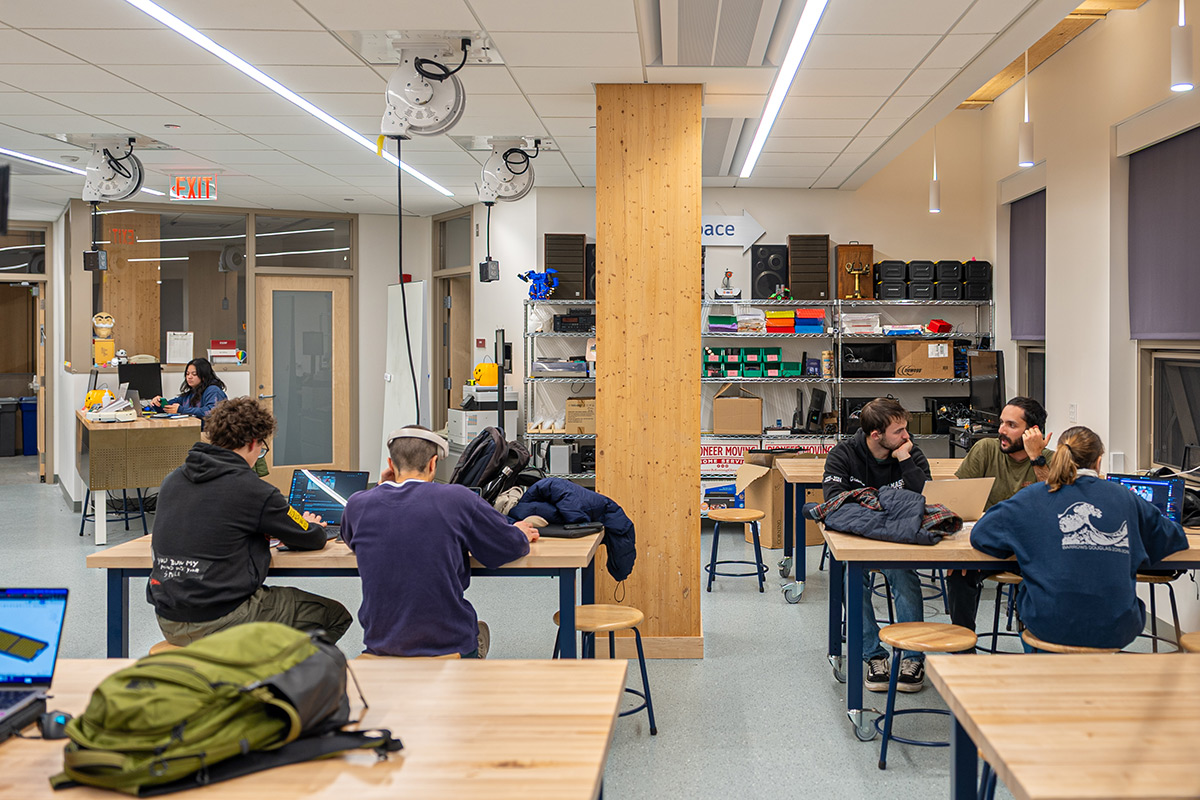
Manning College Dean Keith Marzullo and his wife, tech industry leader Dr. Susie Armstrong, have made a transformative investment in the Manning College Physical Computing Makerspace.
Keith Marzullo and Susie Armstrong have many passions. Married for more than 40 years, the couple enjoys exploring both their shared and individual interests, from kayaking and bicycling to guitar and fabric arts.
“There are a lot of things that pulled us together, a combination of the cerebral and the physical,” says Marzullo, who joined UMass Amherst in 2025 as dean of the Manning College of Information and Computer Sciences.
Among their passions is creating opportunities for innovation for future generations. This is why they decided to invest in the Manning College Physical Computing Makerspace by establishing the Dean Keith Marzullo and Dr. Susie Armstrong CICS Physical Computing Makerspace Endowed Fund.
“As a leader of a college, it’s important to lead by example. Choosing something we value to invest in is a wonderful, important part of my job. When I first toured the makerspace, it was bursting with great ideas, but no space. I thought, ‘This is something that looks wonderful, but it’s got to grow.’”
Manning College Dean Keith Marzullo
Armstrong, who recently retired following an accomplished career as an innovator in the technology industry, readily agreed.
“I am an engineer. I like to make things work, and I like to build things. That propensity has served me well, and I think it can serve many people,” she says. “When Keith told me about the burgeoning makerspace [at UMass], it seemed like a very tangible piece where we could make a certain level of impact.”
Trailblazers in tech
Armstrong and Marzullo, who share a background in communications and computation, first met when they were sharing an office at Xerox. Marzullo was at the time pursuing his Ph.D. at Stanford University.
A prominent figure in computer science, Marzullo is known for developing the Xerox Research Internet Clock Synchronization protocol, one of the first practical fault-tolerant protocols for keeping widely distributed clocks synchronized with each other.
“I was known at Xerox as ‘Father Time’ because of this work,” he says.
Marzullo has held several academic roles, most recently as dean of the University of Maryland College of Information Studies. He has also served in leadership roles in the federal government, including at the White House Office of Science and Technology Policy and at the National Science Foundation. He was recognized as an Association for Computing Machinery Fellow in 2011.
Armstrong, a graduate of California Polytechnic State University, worked at Xerox for 10 years before landing at Qualcomm, where she spent the next 31 years. There she played a significant role in the development of mobile internet, inventing the software that allows cell phones to use data to access web pages, photos, and apps.
“In the late 1990s, the chief technology officer of Qualcomm asked, ‘Can you have internet data and connection to internet ready in time for the February trade show?’ I said, sure,” Armstrong says. This led to the creation of a small flip phone with a 1-inch display that could surf the internet. “One year later they were commercializing it. That little flip phone with the 1-inch display was the first smart phone.”
Inspiring future generations
Located on the third floor of the new Computer Science Laboratories Building, the Manning College Physical Computing Makerspace is a collaborative workspace whose mission is to support hardware projects centered on physical computing. It is focused on three major areas: robotics, electronics, and digital fabrication.
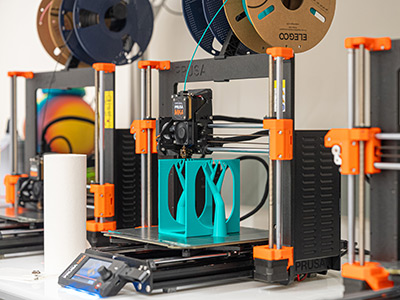
“As a hub for innovation, [the makerspace] is designed to empower students, faculty, and researchers as they explore computing science in a hands-on context,” says Thomas Burns, UMass Amherst assistant director of facilities and infrastructure. “The space offers resources ranging from 3D printing and electronics workbenches to hardware workshops and prototyping tools, all of which fuel the college's vibrant culture of creativity, collaboration, and computing for the common good.”
Primarily used by undergraduate and graduate students in the Manning College, the makerspace is also a space for cross-disciplinary collaboration with other departments, including physics, biomedicine, and chemistry students and faculty in the College of Natural Sciences.
“We provide an open space for community members to ideate, innovate, iterate, and realize projects,” says Mike Pfeiffer, who is the makerspace manager. “Some of our own robotics labs regularly prototype new robotics parts on our 3D printers. We’ve also collaborated with student organizations, like the UMass cybersecurity and robotics clubs.”
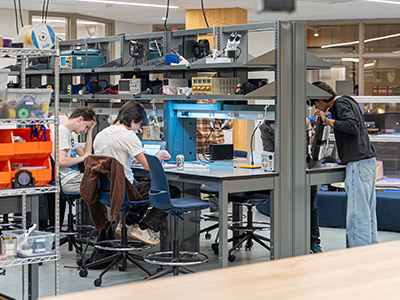
“The diversity of our makerspace community is part of what makes it so special,” Burns says. “On any given day you might see a group of new students learning how to solder, or a faculty member teaching a lab on circuit design, or graduate students 3D printing parts for their latest robot. All are welcome, and we have very talented staff on site to help guide those who need it.”
Burns and Pfeiffer both say that Marzullo and Armstrong’s support for the makerspace will have a tremendous impact for generations to come.
“A fund like this is truly game-changing. It presents growth opportunities for the makerspace far beyond what can be achieved through our normal operating budget. And this is just the beginning,” Burns says. “Over time this fund will translate directly into more workshops, more hackathons, more summer programs, more small grants for student projects, more guest speakers, stronger alumni connections, and more opportunities to create transformative learning experiences for our students.”
“Their support is validation that physical computing, hardware research, and making things go beep in the night are important as educational methods that support the long-term goals of our student community,” Pfeiffer says. “Dean Marzullo and Dr. Armstrong's support lets students know that they belong in a space that supports who they are and celebrates their passions for hardware and technology.”
Armstrong and Marzullo hope their gift will inspire others to join them in supporting the Manning College Physical Computing Makerspace. To provide added incentive, they are sponsoring the CICS Physical Computing Makerspace Challenge as part of this year’s UMassGives, which will be held April 29 and 30. During this time, gifts made to the makerspace will be matched, up to a total of $25,000.
“Susie and I agree that doing things physically is important and seeing this growth is a way to motivate our students,” Marzullo says. “The goal is to encourage others to help us make this the best makerspace ever.”
Help shape what’s happening in the new Computer Science Laboratories with a gift to the Makerspace Fund.
- Grow Investment
- Manning College of Information & Computer Sciences
Discover how UMass is expanding its investment in research, teaching, and creativity.
- College of Humanities and Fine Arts
- Grow Investment
Unearthing a Legacy
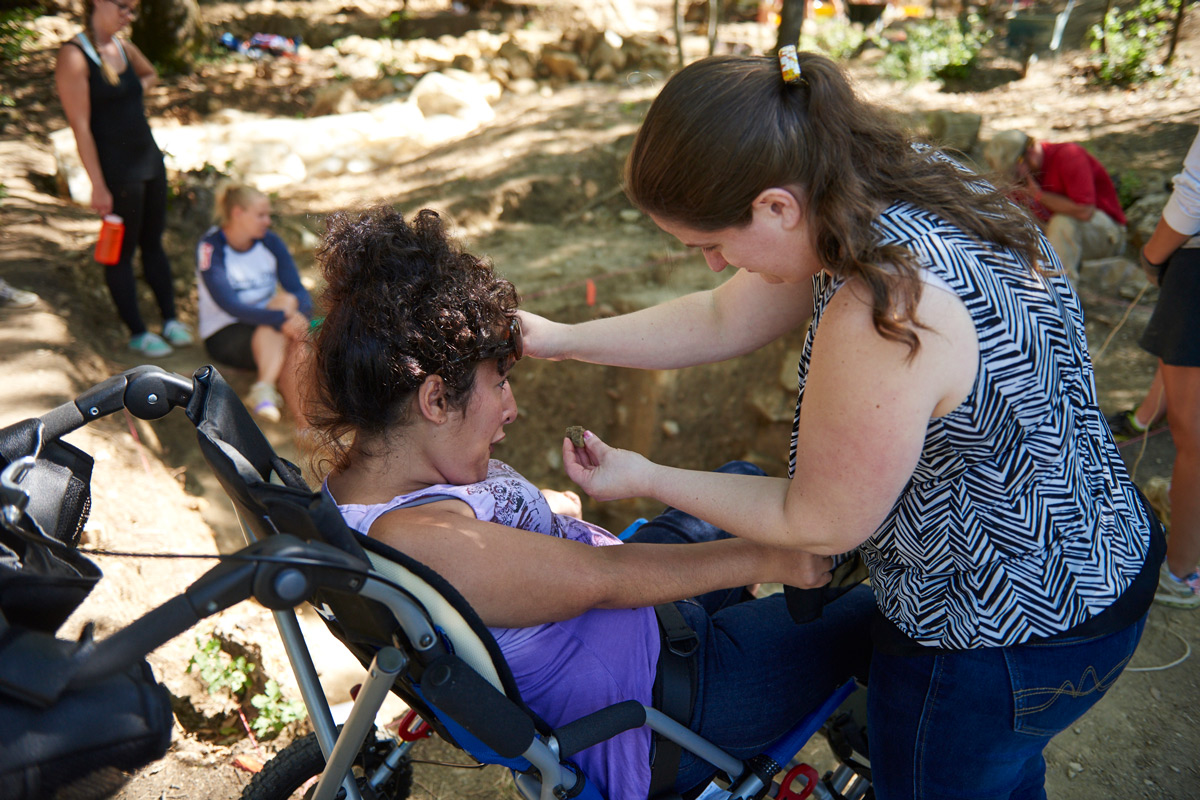
A $1.5 million gift establishes the Caroline H. Horvitz Professorship at UMass Amherst, honoring her life and expanding access to archaeology through innovative, student-centered teaching.
- Grow Investment
- Magnify Impact
- Revolutionize Access
Accelerate Surpasses $600 Million
Thanks to the generosity of the UMass Amherst community, the campaign has reached an important milestone, 18 months ahead of schedule.
- Magnify Impact
- Manning College of Information & Computer Sciences