
UMass Amherst shaped an astronomer’s career. Today, he maintains a strong connection with the Department of Astronomy and gives back to the university he loves.
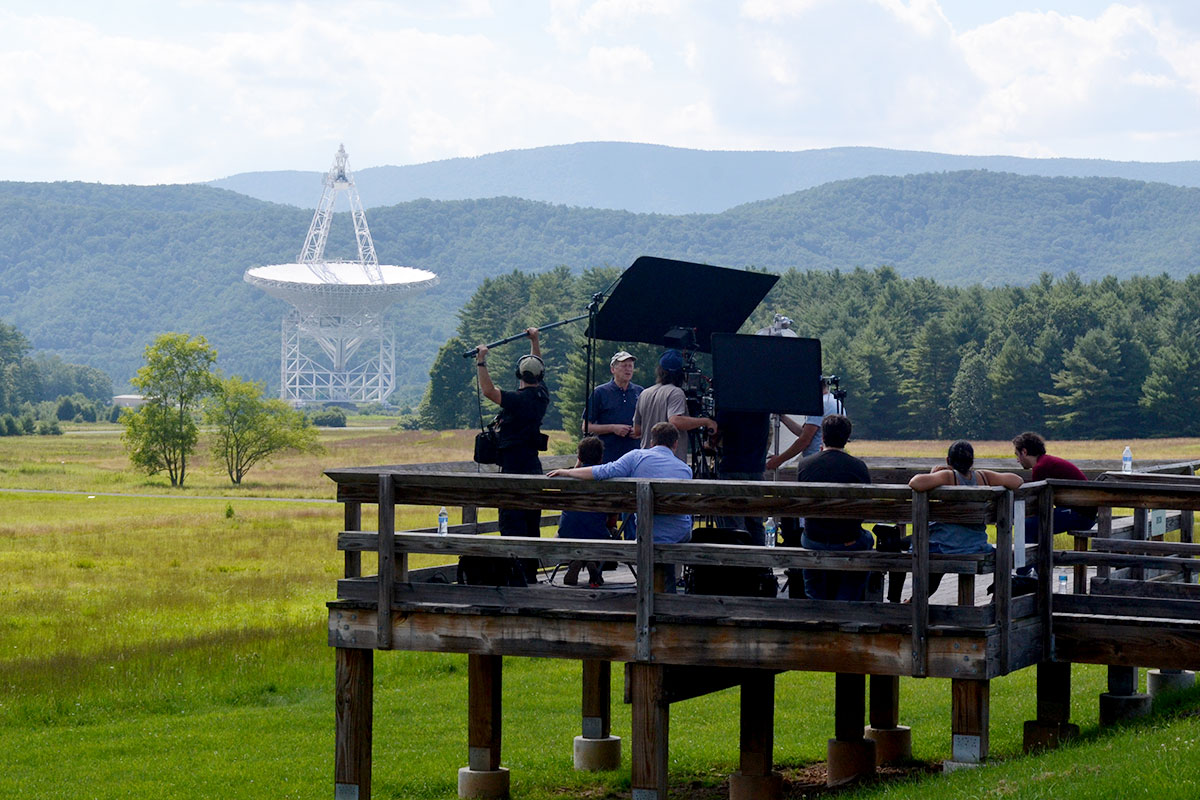
The National Quiet Zone, a remote area in West Virginia where cellular phones are banned and even Wi-Fi and microwaves are regulated, has long fascinated outsiders and was even the subject of a recent documentary, “The End of Quiet.” The film, which was screened at the 2025 Tribeca Film Festival, explores life in what it describes as “the most disconnected place in the USA.”
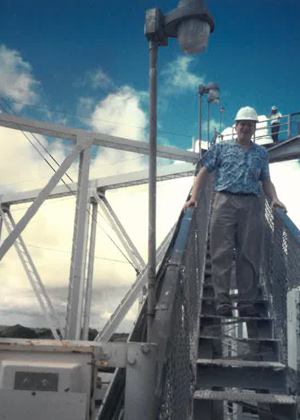
Jay Lockman ’79 PhD is a longtime Green Bank resident who was featured in the documentary. The area, Lockman says, is “very good for radio telescopes, but has made us a bit of an outlier in western civilization.”
For more than 30 years, Lockman, a radio astronomer, has worked at the Green Bank Observatory, home of the world’s largest fully steerable radio telescope and the reason for the ban on wireless interference. He has held several roles during his tenure at Green Bank, including Green Bank Telescope principal scientist and observatory director, and currently serves in an emeritus position. His research interests include studies of the structure and evolution of the Milky Way and the structure of the interstellar medium—the gas, dust, and radiation that fills the space between stars within a galaxy.
“Green Bank is very much off the beaten path, but in some senses, it is the center of the world,” Lockman says. “It is a world-class facility for research and a unique place worldwide that draws a steady stream of science visitors.”
It also attracts reporters and filmmakers, including noted German director Werner Herzog, who filmed Lockman for his documentary on the internet, “Lo and Behold: Reveries of the Connected World.”
As an undergraduate, Lockman worked at the National Radio Astronomy Observatory in Charlottesville, Virginia as part of his Drexel University co-op program. There, he met two astronomers from UMass, who talked about the university’s newly formed Department of Astronomy.
Lockman thought UMass sounded like a great place, and it was the only graduate program he applied to. At UMass, he found supportive faculty who made the Department of Astronomy “a fun place to be, both intellectually and personally,” and he gained an education he carried with him throughout his career.
“UMass was fundamental to my career success. I got a great grounding in the fundamentals of astronomy. And every week I use the math I learned in one of my courses.”
Jay Lockman’79 PhD
According to Lockman, part of what made the UMass Department of Astronomy unique at the time was the opportunity for hands-on learning.
“We gained knowledge you only get from real hands-on interaction with your tools. If you wanted to learn radio astronomy, you would be working with telescopes,” he says. “It also encouraged the development of leadership skills.”
Today, Lockman’s connection with the Department of Astronomy remains strong. He has returned to campus several times to give talks and regularly engages in research with UMass professors. He often finds UMass connections through his work.
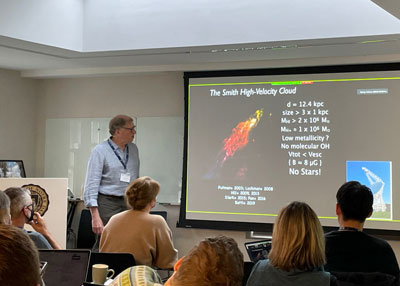
“Astronomy is a small community. The National Science Foundation asked me to be on a panel regarding a telescope in Mexico, and UMass was the American partner,” he says. “I also recently co-authored a paper led by a UMass faculty member. I have a great affection for the department and the faculty.”
“We are deeply proud of Jay Lockman, whose career exemplifies the transformative power of a UMass education. Over decades at the Green Bank Observatory, he has advanced our understanding of the Milky Way and interstellar medium, including pioneering the concept of the Lockman Hole—a nearly-dust free portion of the sky that has been studied by a wide variety of ground-based astronomical instruments,” says Grant Wilson, professor and head of the UMass Department of Astronomy. “Jay’s continued engagement with UMass and his generous support of our department reflect the enduring bond he keeps with his academic home. His example shows our students what is possible when talent, curiosity, and perseverance meet. We are honored to count him among our alumni.”
Lockman is a generous donor to the Department of Astronomy, showing his appreciation for the education that was so influential on his career. He also supports several other areas across the university that are meaningful to him, including scholarships, the Fine Arts Center, libraries, and the Student Care and Emergency Response Fund, which provided support when he found himself in an emergency situation as a student.
“It made me really appreciate how having access to a small amount of money at the right time can be critical,” Lockman says.
When he thinks back on his time at UMass, Lockman says that it exceeded his expectations.
“UMass sounded perfect,” he says. “And it was.”
Interested in supporting aspiring astronomers at UMass? Make a gift today to the Department of Astronomy or the Student Care and Emergency Response Fund.
- College of Natural Sciences
- Grow Investment
- Revolutionize Access
See how UMass is transforming access to education and empowering students to thrive.
- College of Natural Sciences
- Commonwealth Honors College
- Isenberg School of Management
- Revolutionize Access
UMass Changed Her Life. Now, She’s Paying It Forward
Inspired by her own UMass Amherst experience, an alumna supports future generations of students.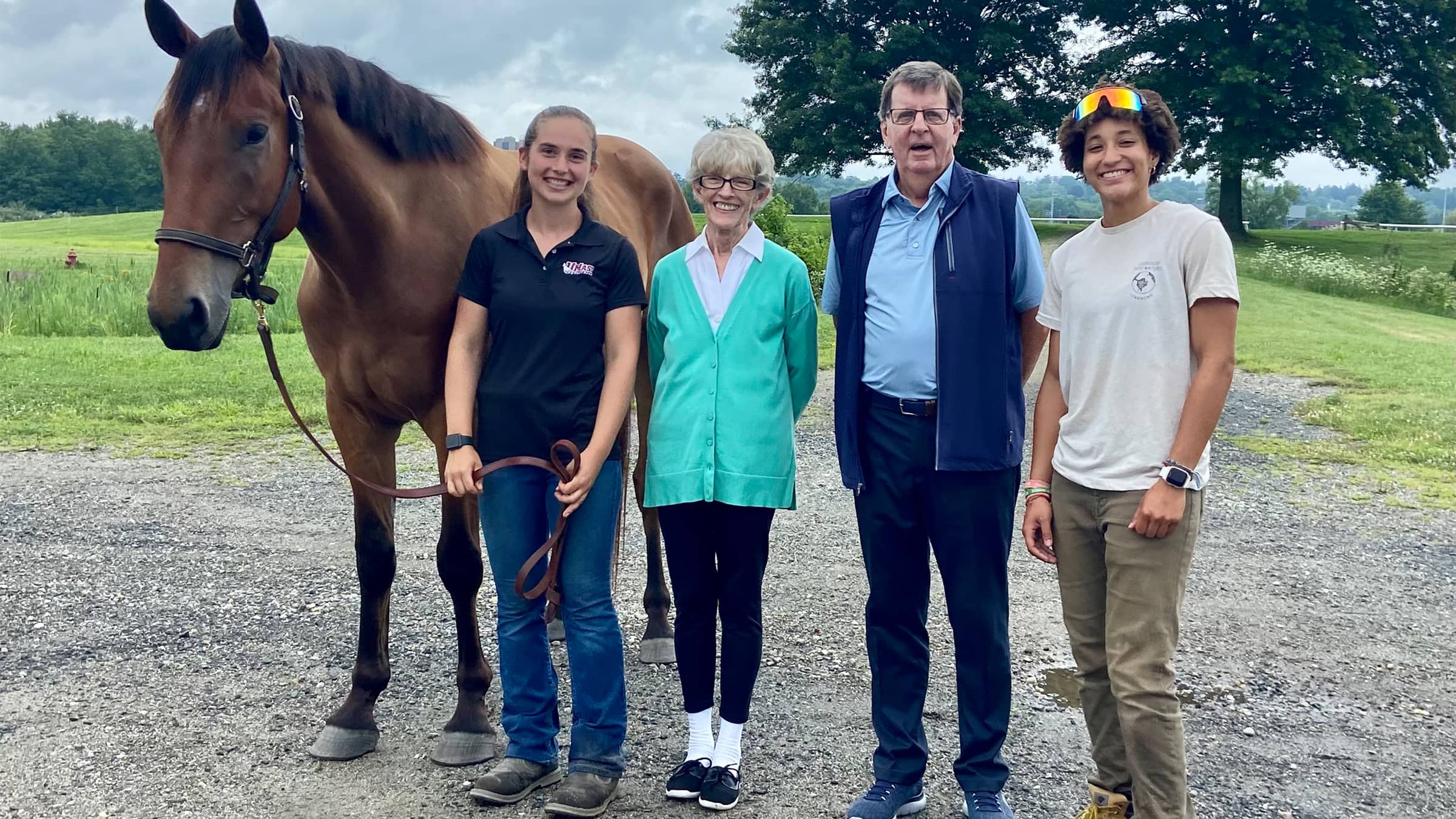
- College of Natural Sciences
- Grow Investment
- Revolutionize Access
Turning Their Passion into Action
Inspired by their passion for animals, Richard ’69 and Sandra Johnson give back to the UMass Amherst Department of Veterinary and Animal Sciences.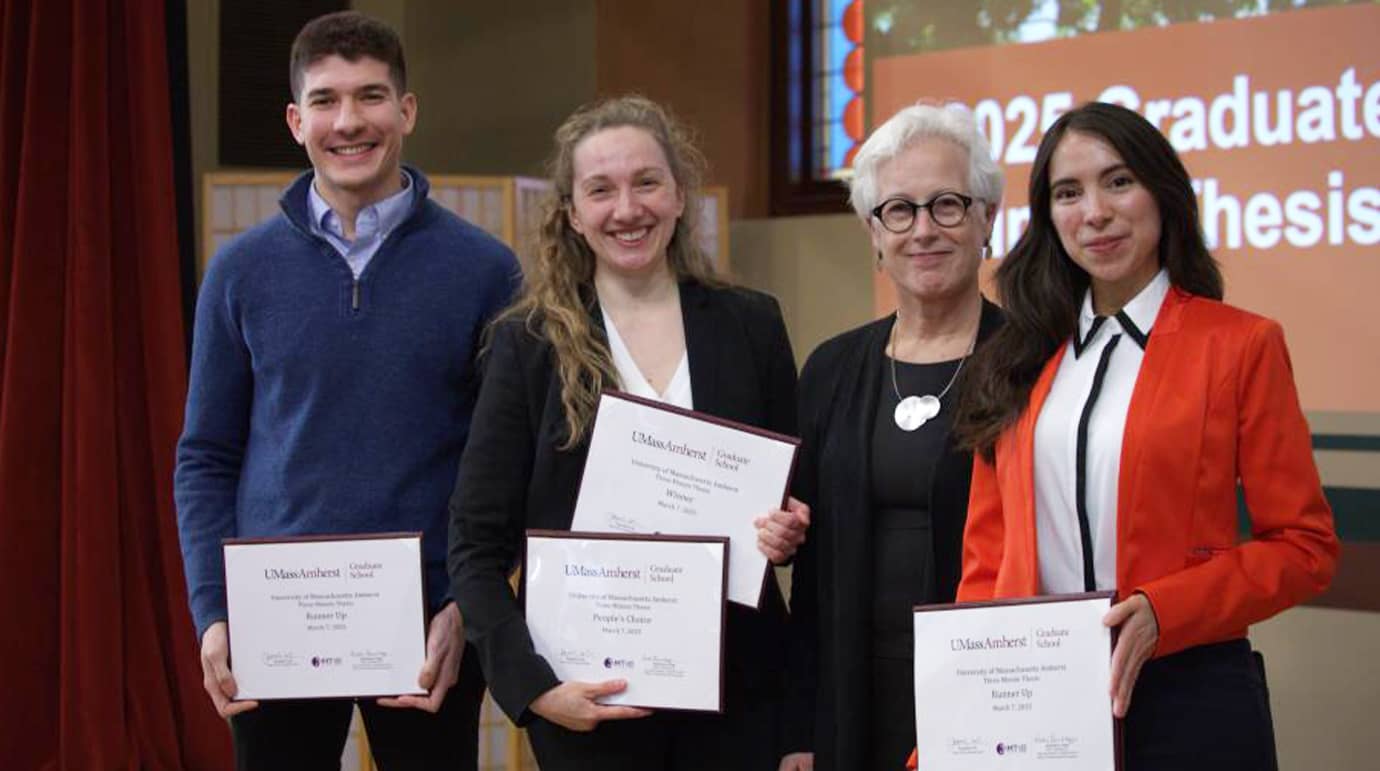
- College of Natural Sciences
- Graduate School
- Grow Investment